The first recorded evidence of the use of forensic science is contained in a book produced in Song dynasty China in 1248.
Hsi Duan Yu (Washing Away of Wrongs) details how an investigator established that a particular sickle was used to kill a murder victim by testing different blades on animal carcasses and comparing the wounds.
In more recent times forensic science has become a greatly specialised field, with many disciplines involved besides genetics, including:
Classification of Forensic Science: (Widely Used)
Anthropology: Forensic anthropologists, often working with pathologists, as seen on TV shows such as CSI and Silent Witness, study badly decomposed remains to work out age, sex, height and ancestry, as well as investigating signs of trauma or disease.
Entomology: The study of insects, which helps establish issues such as time and place of death, using information such as the gestation period of species which lay eggs on dead bodies.
Palynology: Detailed knowledge of pollen types and distribution can help establish time and location of death, and whether a body has been moved.
Toxicology: A variety of techniques are used to detect the presence in a body of any of a wide range of poisons, chemicals and drugs.
April 19, 2010

April 18, 2010
Fourteen Characteristics of a Serial Killer

Could you be raising a criminal? Acts of violence don't come out of nowhere, and every parent should be aware of the clues along the way. For the most violent of criminals, there are warning signs that often start in childhood. Below is a list of the 14 most common traits of serial killers.
1. Over 90 percent of serial killers are male.
2. They tend to be intelligent, with IQ's in the "bright normal" range.
3. They do poorly in school, have trouble holding down jobs, and often work as unskilled laborers.
4. They tend to come from markedly unstable families.
5. As children, they are abandoned by their fathers and raised by domineering mothers.
6. Their families often have criminal, psychiatric and alcoholic histories.
7. They hate their fathers and mothers.
8. They are commonly abused as children — psychologically, physically and sexually. Often the abuse is by a family member.
9. Many serial killers spend time in institutions as children and have records of early psychiatric problems.
10. They have high rates of suicide attempts.
11. From an early age, many are intensely interested in voyeurism, fetishism, and sado-masochistic pornography.
12. More than 60 percent of serial killers wet their beds beyond the age of 12.
13. Many serial killers are fascinated with fire starting.
14. They are involved with sadistic activity or tormenting small creatures.
Source: Internal Association of Forensic Science, an article written by FBI Special Agent Robert K. Ressler
"The Serial Killer," Harold Schechter
April 17, 2010
C.S.I.: High school

John Odgren, currently on trial for allegedly murdering a fellow student at Lincoln-Sudbury Regional High School, was known for his fascination with violence. He fashioned himself as “Jack,” a character from his favorite Stephen King novel. Odgren loved to play violent video games and had a keen interest in knives.
Odgren’s fascination went further than just a hobby. His obsession with all things violent was so intense that he attended a forensic-themed summer program and took a high school course in forensics, both in the months just prior to the homicide with which he is charged. Not only did the class satisfy part of his academic requirements, but it surely satisfied his passion for the dark side of the human condition. This is not to suggest that the young defendant was inspired to take his lessons much too far--only that C.S.I.-type instruction may have reinforced his existing fascination with violence.
John Odgren in 2007 (File Photo)
Lincoln-Sudbury High is but one of the countless schools around the country that have adopted academic curricula focused on the interplay between science and the law. In recent years, high schools and even middle schools have exploited their students’ morbid fascination as a strategy for spoon feeding them science--to make chemistry, biology and other fields more palatable.
Read this Entire Blog at Crime and Punishment
April 16, 2010
Aerial images in forensic studies
A technique that shows evidence of animals buried beneath green spaces decades ago could be used to help find human remains.
"Hyperspectral imaging" analyses visible and infrared images taken by aircraft and detects changes in vegetation caused by nutrients released from decomposing bodies.
Forensic archaeologists from McGill University in Montreal, Canada, tested the technique at a Quebec safari park and detected differences in chlorophyll content of plants growing on known burial sites. The findings, presented at the American Academy of Forensic Sciences annual meeting in February, were reported in New Scientist.
A UK forensic archaeologist, Ian Hanson of the University of Bournemouth, said the method could help find mass graves in war zones.
His team has researched how maggots feeding on buried carcasses can raise soil temperature enough to be detected by infrared, even when the body has lost its own heat.
"Hyperspectral imaging" analyses visible and infrared images taken by aircraft and detects changes in vegetation caused by nutrients released from decomposing bodies.
Forensic archaeologists from McGill University in Montreal, Canada, tested the technique at a Quebec safari park and detected differences in chlorophyll content of plants growing on known burial sites. The findings, presented at the American Academy of Forensic Sciences annual meeting in February, were reported in New Scientist.
A UK forensic archaeologist, Ian Hanson of the University of Bournemouth, said the method could help find mass graves in war zones.
His team has researched how maggots feeding on buried carcasses can raise soil temperature enough to be detected by infrared, even when the body has lost its own heat.
April 15, 2010
A Really ODD Solution

For anyone who has spent a significant amount of time in an urban setting, the scene of a bomb squad responding to a report of a suspicious package might be all too familiar. But just how is it determined that the lunchbox left under the park bench is just leftovers - or a lethal weapon? The most common way is spectroscopy.
"Spectroscopy is good, but it only gets you so far," says Eric Houser, a program manager in the Explosives Division of the Department of Homeland Security's Science and Technology Directorate (S&T). The wave of the future may lie in a technology called optimal dynamic detection (ODD), which overcomes many of spectroscopy's limitations.
Spectroscopy uses the color spectrum to shed light on a package's makeup. Since it uses visible light only, spectroscopy can't see through a lunchbox, but what it can see is microscopic residue on the box's outer layer, which can provide telltale clues about what's inside.
Using spectroscopy, bomb squad personnel will beam a laser at the package, then compare the reflected "light signature"-an optical fingerprint-against a library of known signatures for chemical compounds, such as nitroglycerin. If there is nitro inside, chances are that some of it will be found in the package's residue.
This method presents two problems. First, there's distance. Many threat detection methods require either the person or the detector to be physically near the bomb, making spectroscopy extremely dangerous.
Second, approaches like spectroscopy, which rely on reflected light, often are not sensitive or selective enough, especially in the real world where chemical signatures may overlap or be contaminated. Think of light signatures as fingerprints. Capturing a fingerprint from a clean surface is not especially difficult. But in real life, surfaces are anything but clean, and dust, grease, or even ink stains can cause a backpack or lunch pail to bear small deposits of several different chemicals, each with a unique optical fingerprint. To minimize false alarms, a detector must be both sensitive and selective.
Source: Forensic Report
Read the entire article here :)
April 14, 2010
Forensic DNA blow to commercial whaling proposals
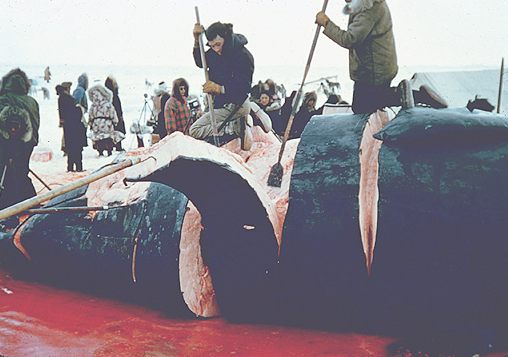
Proposals to resume commercial whaling have been dealt a blow by DNA detective work showing that restaurants in the US and South Korea illegally sold whale meat from Japan.
In June, Japan, Iceland and Norway are expected to ask the International Whaling Commission (IWC) for permission to resume commercial whaling. They say they can prevent smuggling by matching the DNA of whale meat sold in markets to a register of all legally caught whales. But all have refused to make their DNA registers public.
To find out the origin of whale meat being sold outside Japan, Scott Baker of Oregon State University in Corvallis and colleagues secretly took samples from two restaurants, one in Santa Monica, California, and another in Seoul, South Korea.
They compared the DNA with that from samples bought in Japan, and found that they came from the same animals – proving that meat from whales hunted in Japan's scientific programme have been illegally sold abroad. The findings resulted in police raids on the restaurants last month.
Read this Article here:NewScientist
April 13, 2010
IFO TURNS ONE TODAY!! :)

Dear All,
IFO turns one today on April,13, 2010!!
We are glad to announce that today April, 13, 2010 is the day we celebrate our one year of existence. Ifo Forensic Standards and Research Pvt Ltd have come across a young class of Forensic Experts who have been in a continuous stride to bring its forensic objectives in the limelight.
We have Launched our Celebration Issue of IFSR Times;E-Magazine- "Forensic Silhouette" on this auspicious occasion.
Please visit the following link to the E-Mag.
http://www.ifsr.in/press/
Thank you one and all for your continuous support.
--
Regards,
IFO Forensic Experts
IFSR Pvt Ltd. Delhi. India
Contact:011-26320016
Web: www.ifsr.in
Subscribe to:
Posts (Atom)
Featured Post

-
IFO FORENSIC STANDARDS AND RESEARCH PVT LTD (NEW DELHI), INDIA IFO is registered forensic and investigative Company, it is a panel of expert...
-
Grant Lets Cops Get Robot, Forensic Light, Video System Night vision goggles, a mini robot and new video system are just some of the thin...


